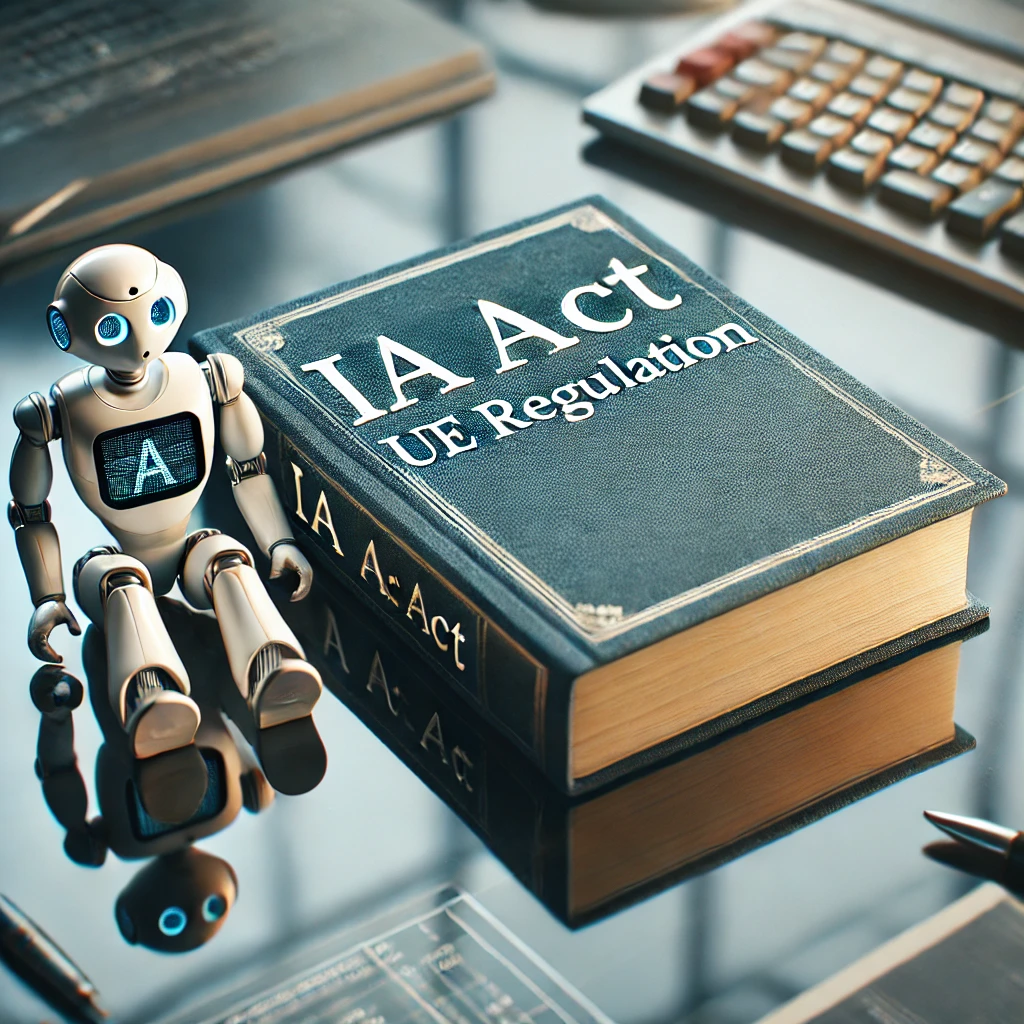
The AI ACT: A Regulatory Framework for Artificial Intelligence in Europe
Introduction
The AI ACT, or Artificial Intelligence Act, is a groundbreaking legislative proposal introduced by the European Commission in April 2021. Designed to regulate artificial intelligence (AI), this regulatory framework is part of the European Union’s (EU) broader effort to protect fundamental rights while fostering AI innovation. It is one of the first comprehensive attempts to regulate AI worldwide, with potentially significant impacts not only in Europe but also globally.
This legislation, which came into effect on August 1, 2024, aims to address the risks posed by AI systems by categorizing them into risk levels ranging from minimal to unacceptable. This article explores the key elements of the AI ACT, its implications for businesses and governments, as well as the challenges and criticisms surrounding its implementation.
Background: Why Is a Specific AI Regulation Necessary?
With the rapid advancement of AI technologies, ethical and social concerns have emerged. AI is now prevalent across various industries, including healthcare, finance, transportation, and education. This widespread adoption raises critical questions about fundamental rights, discrimination, data security, and civil liberties.
Recent examples of biased AI algorithms in hiring decisions, judicial recommendations, and medical diagnoses have demonstrated that without proper regulation, AI can perpetuate inequalities and biases. Additionally, some AI applications, such as facial recognition and autonomous weapons systems, pose significant threats to privacy and security.
To maintain its leadership in citizens’ rights protection, the EU introduced the AI ACT to minimize risks while promoting AI-driven innovation.
Structure of the AI ACT: A Risk-Based Approach
The AI ACT classifies AI systems into four risk categories:
1. Unacceptable Risk AI Systems (Banned in the EU)
AI systems in this category are deemed to pose severe threats to fundamental rights and are therefore prohibited. Examples include:
AI systems manipulating human behavior to deprive users of free will.
Government-run social scoring systems that rank individuals based on behavior or personal characteristics.
Real-time biometric surveillance in public spaces for law enforcement (except in exceptional cases such as counterterrorism efforts).
2. High-Risk AI Systems
This category includes AI systems that significantly impact safety or fundamental rights. These systems must meet strict compliance requirements, including:
AI in critical infrastructure (e.g., transportation) where malfunctions could be life-threatening.
AI used in education or training, affecting access to opportunities.
AI in essential services (e.g., credit scoring, housing eligibility).
AI in healthcare, such as diagnostic tools.
These systems require rigorous risk management, auditing, and transparency before market deployment.
3. Limited-Risk AI Systems
These AI systems do not pose significant risks but must adhere to transparency requirements. For example:
Chatbots must disclose that users are interacting with AI.
4. Minimal-Risk AI Systems
Most AI systems fall into this category, posing negligible risks to safety and fundamental rights. These systems are not subject to regulatory obligations, allowing greater flexibility for innovation.
Impact on Businesses: Compliance, Innovation, and Competitiveness
1. Compliance Obligations
Companies developing high-risk AI systems must comply with strict requirements, including:
Implementing risk management systems for high-risk AI.
Maintaining detailed technical documentation to prove regulatory compliance.
Conducting regular external audits to ensure proper functioning.
Ensuring post-market monitoring to detect new risks or failures.
2. Impact on Innovation
The AI ACT seeks to balance regulation and innovation. While high-risk AI systems face significant regulatory scrutiny, low-risk AI applications benefit from relaxed rules. Additionally, regulatory sandboxes will allow companies to test AI technologies in controlled environments before full deployment.
3. Impact on Non-EU Businesses
The AI ACT applies not only to EU-based companies but also to foreign businesses offering AI-based products or services in Europe. This means US and Asian companies must comply with the AI ACT if they wish to operate in the European market. This could influence global AI practices.
Criticism and Challenges of the AI ACT
1. Risk of Hindering Innovation
Some tech industry leaders fear that strict regulations may stifle AI innovation, particularly for startups and small businesses lacking the resources for compliance. These companies may struggle to meet the costly regulatory demands, giving an advantage to large multinational corporations.
2. Enforcement Challenges
Establishing a harmonized regulatory framework across the EU is a complex challenge. Countries and companies may interpret rules differently, leading to uneven enforcement. Additionally, the fast-paced evolution of AI technology could render some regulations outdated, necessitating frequent updates.
3. Addressing Bias and Discrimination
While the AI ACT aims to mitigate algorithmic bias, ensuring AI systems are entirely free of discrimination remains difficult. Bias often originates from training data, and existing mitigation methods are not always effective.
The Future of the AI ACT: A Dynamic Regulatory Framework
The AI ACT is an initial step in regulating AI at scale, but it is expected to evolve over time. The EU has introduced mechanisms such as regulatory sandboxes and periodic reviews to keep the framework adaptable.
As new AI technologies emerge, the AI ACT will need continuous updates to regulate innovations without stifling creativity. Additionally, aligning the AI ACT with other global regulations will be crucial to maintaining European competitiveness while ensuring high protection standards for fundamental rights.
Conclusion
The AI ACT marks a significant milestone in AI regulation. By adopting a risk-based approach, the EU aims to safeguard fundamental rights while fostering AI innovation. However, implementation challenges exist for both businesses and regulators, who must ensure the legislative framework remains relevant in a rapidly evolving field.
The regulation will be phased in, with full enforcement expected by May 2026. Key implementation milestones include:
Immediate bans on unacceptable AI applications within six months.
Establishment of AI codes of conduct within nine months.
General AI system compliance required within 12 months.
High-risk AI systems given 24–36 months to align with the new standards.
The AI ACT has the potential to set a global precedent for AI regulation, influencing AI development and usage not just in Europe but worldwide.
For further information, feel free to contact us for compliance support.